nähe und ferne
2025
INSTALLATION
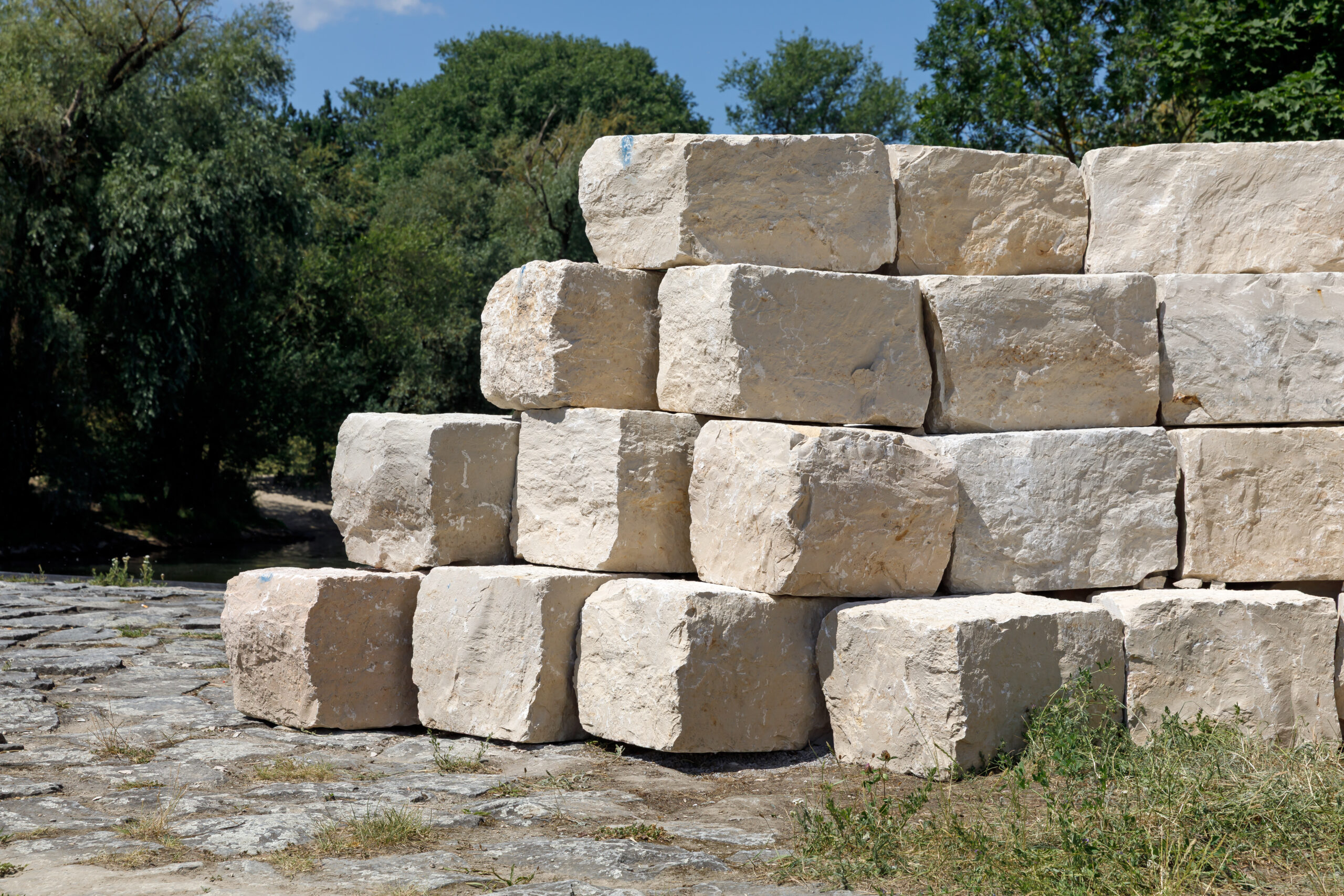
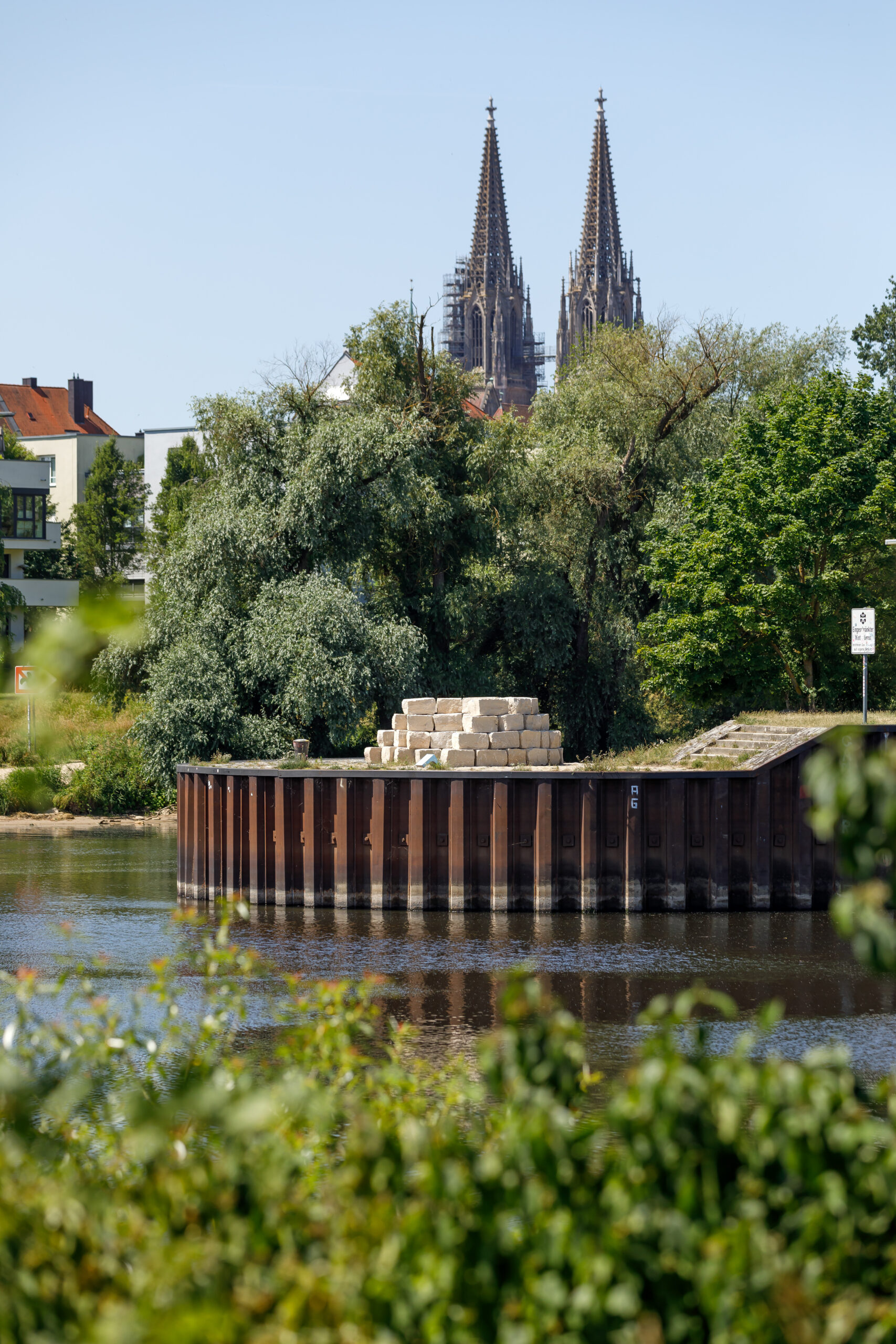
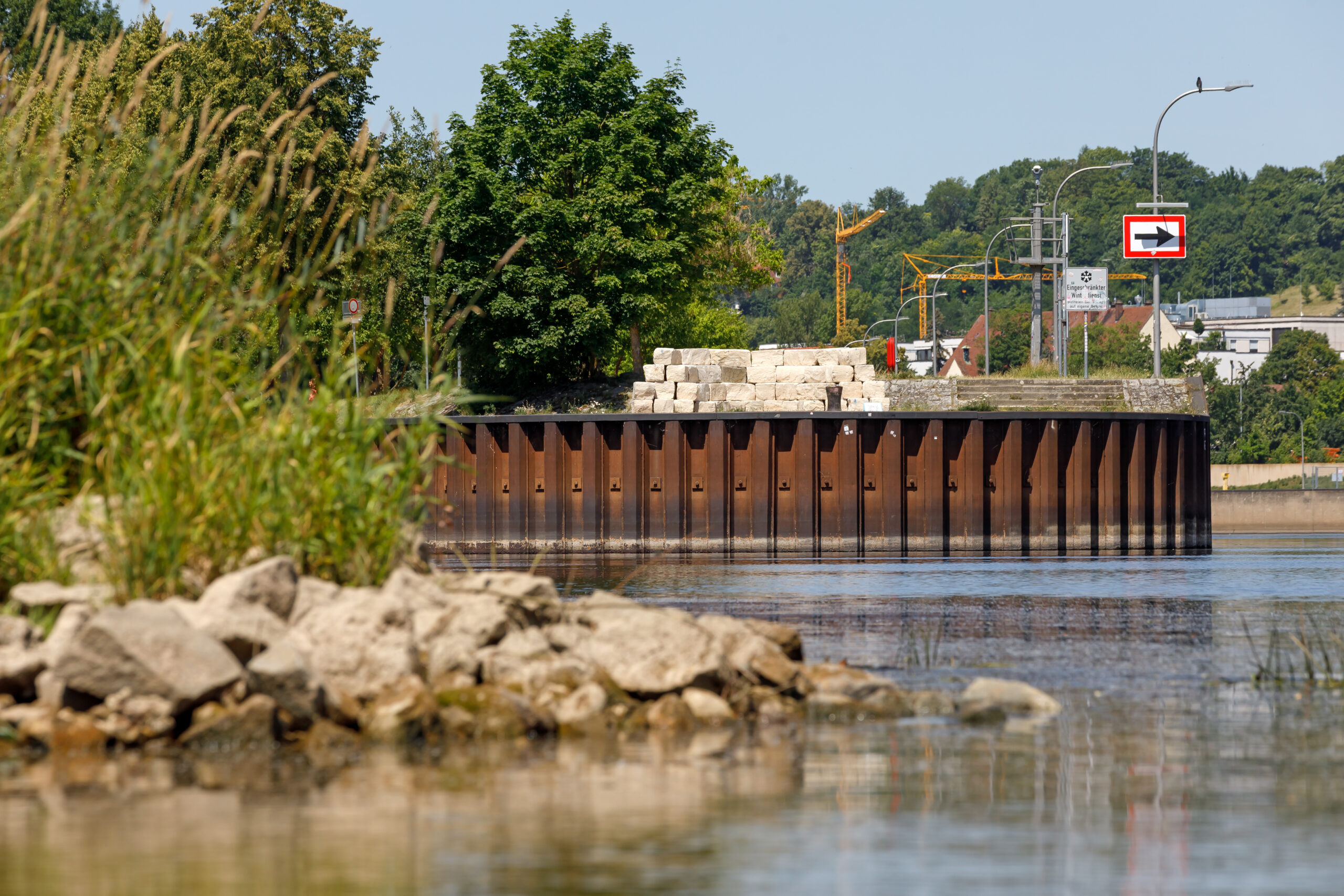
Limestone blocks, green sandstone from the cathedral masons’ lodge
Donumenta, Regensburg, DE
Curator: Regina Hellwig-Schmid Text: Erika Velická, 2026 Photo: Stefan Effenhauser, 2025
Castra Regina is the name of an ancient fortress built to guard the northern frontier of the Roman Empire. The military settlement was constructed from massive stone blocks floated on rafts from quarries upstream, on the southern bank of the Danube opposite the mouth of the Regen river. Its square wall opened through tall gates towards the harbor of the time. In the Middle Ages, Regensburg, which grew within the footprint of the former fortress, thrived on lively trade. The entire riverbank below the city walls served as a harbor. The markets offered goods such as charcoal, iron, grain and lime, as well as horses and, in the early Middle Ages, slaves. Ships had to be towed upstream on ropes, by horses or on foot. The city grew and its main building material remained limestone from local quarries, while the construction of the cathedral also brought in a cheaper, lower-quality green sandstone from the upper layers of the quarries, which degraded more quickly.
With the Industrial Revolution, the harbor slowly began to move from its traditional promontory in the city center towards the outskirts, where at the beginning of the 20th century the groundbreaking modern granary Stadtlagerhaus was built, with several floors for storing wheat and a gas-based rodent control system. Around the new docks grew streets not unlike those of John Steinbeck’s Cannery Row, full of motels for truck drivers and boatmen, transshipment halls, brothels, scrapyards, steelworks, stonemasons’ workshops, and also mosques. Streets where the only public space is the surface of the water and the supermarket parking lot.
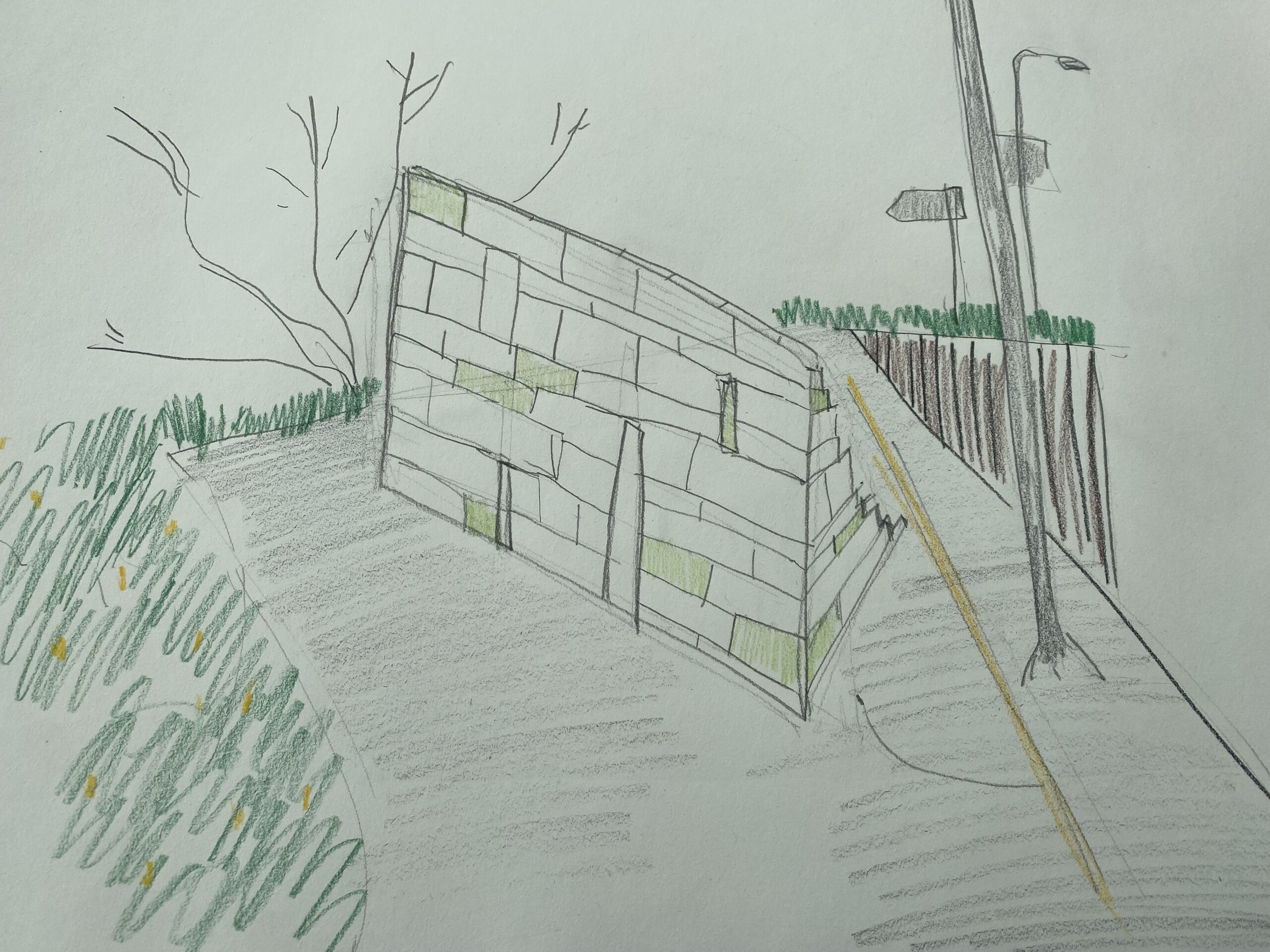
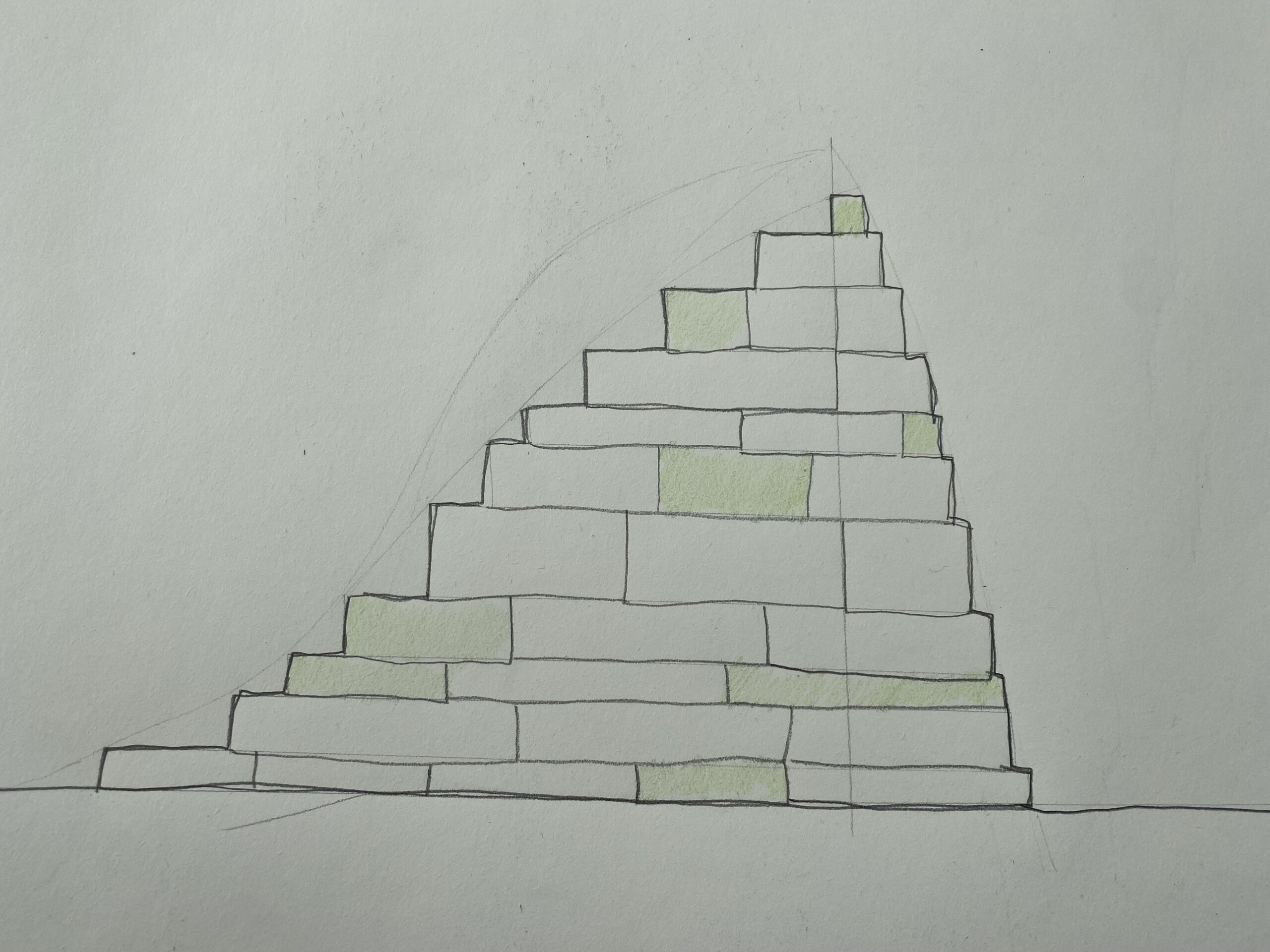
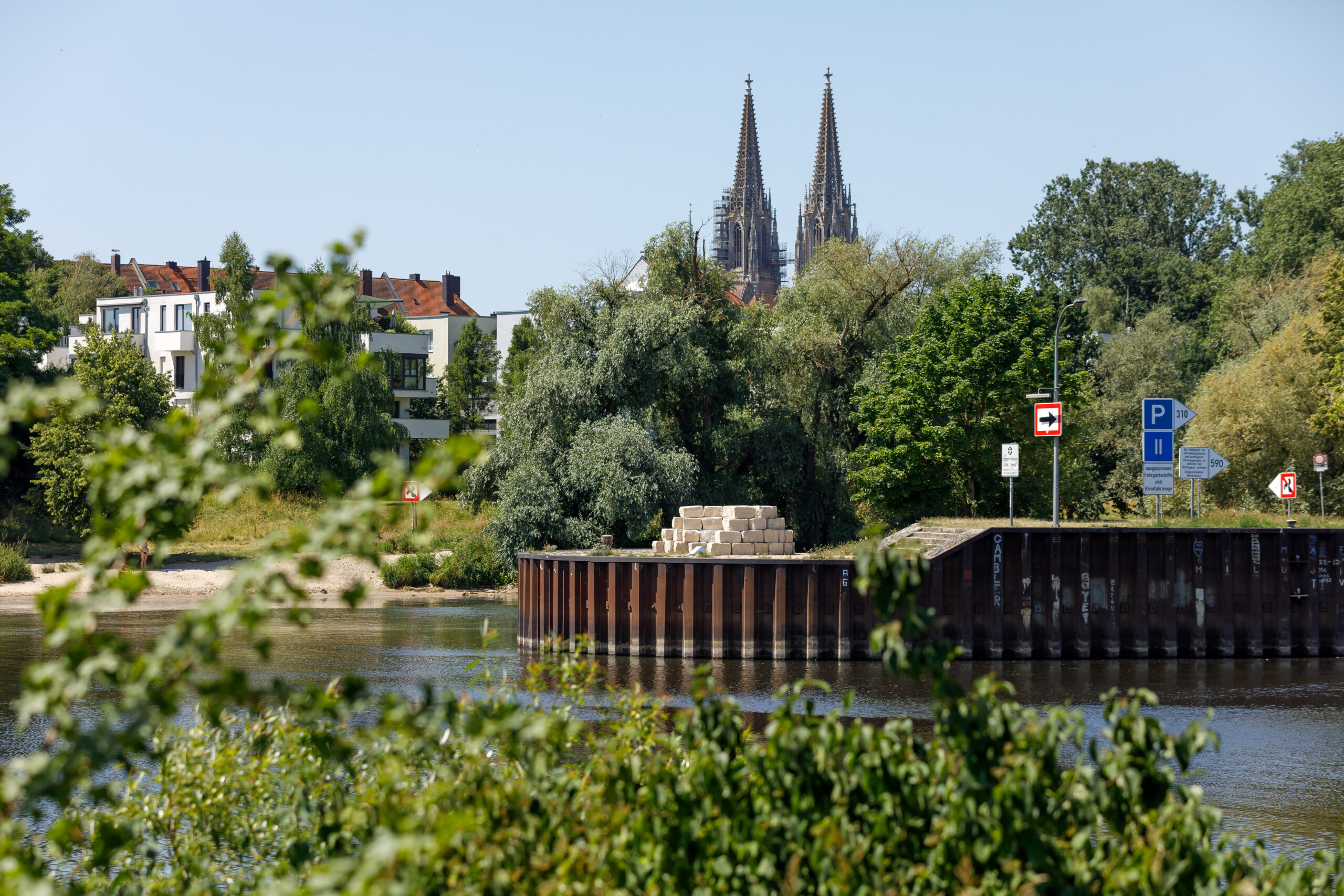
The stone amphitheater, a semi-enclosed structure, was first meant to rise directly within the docks as a meeting place. The concept then moved to an abandoned industrial spit at the confluence of the Regen and the Danube industrial canal. Next to a withered trunk leaning over the water. Onto an asphalt surface lit by the strangely alienating glow of a fluorescent lamp, next to a truck parking lot. In the end, it was given a prominent site closer to the center, to which the structure turns its back, just as the walls of the historic city turn their backs on the externalized aorta of the docks and transshipment yards. Stone blocks from a local stonemason’s workshop, and one historical block straight from the Dombauhütte, found their place on cobblestones, stairs next to stairs. A view of the distant tips of cranes loading ships, drifting away from the original intention to restore, through material, the historical link between the center and the harbor.
The pairing of nearness and distance runs through 20th-century German thought as a relationship that cannot be measured in meters. In his essay on the stranger (1908), Georg Simmel describes a figure who is physically present in a community and yet remains distant from it; in him, nearness and distance do not exclude but condition each other. In his lecture The Thing (1950), Martin Heidegger points out that modern technology abolishes distances but does not bring true nearness: what is within reach is not yet near. Nearness here is not a property of location but the way we relate to places and things.